Space / DISCOVER
Planets around other stars
Planets also orbit stars beyond our own Sun.
Why it amazesOther stars have planets too — across the galaxy, planets may outnumber the stars themselves
The story
Planets orbiting stars other than the Sun are called exoplanets. They come in every variety: worlds hot enough to boil metal, planets whose year lasts only a few days, planets with two suns, and rogue planets wandering the galaxy in permanent darkness with no sun at all.
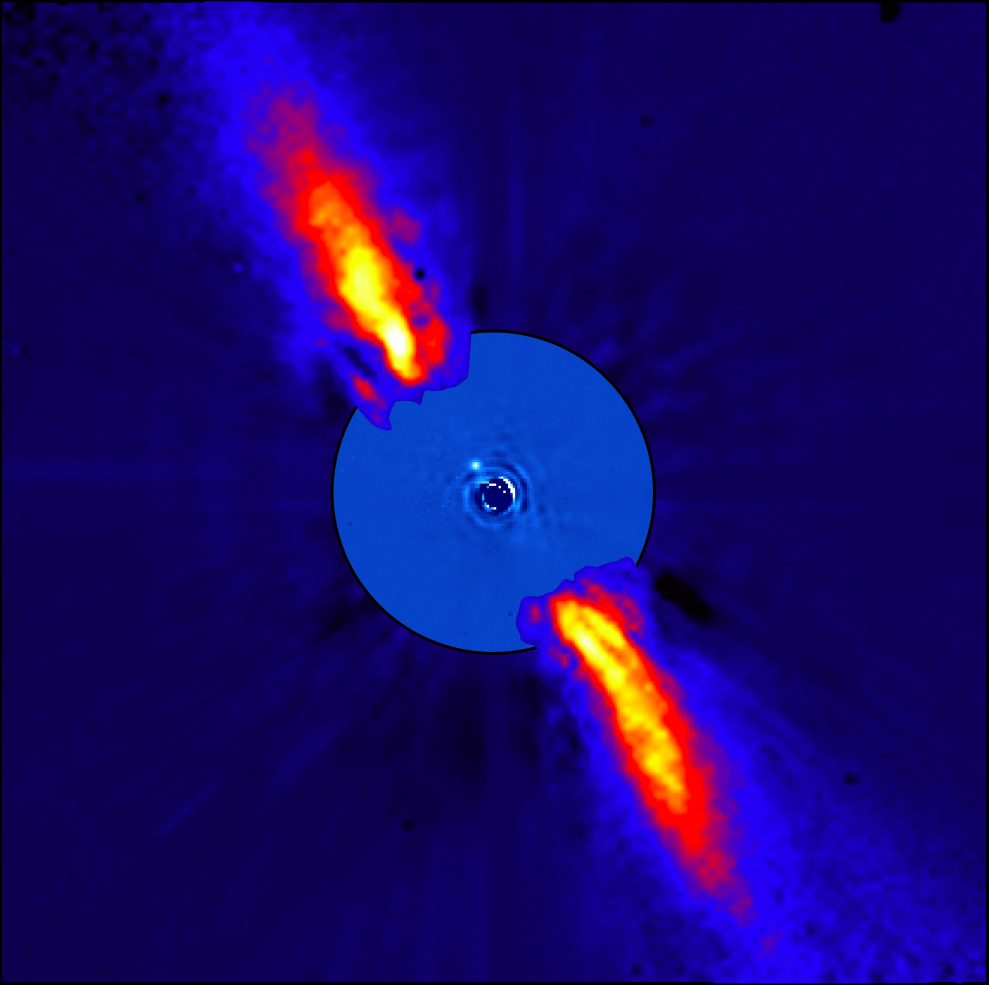
Our Milky Way holds about 400 billion stars. If most stars have systems of planets like ours, the total number of planets runs into the trillions. The photo shows the planet of Beta Pictoris, imaged directly by a telescope: the star’s glare is blocked so the small planet beside it can be seen.
By the data
What to explore next
What can observations actually establish about a distant planet’s atmosphere or surface?
Live data
From the NASA Exoplanet Archive. Figures are a snapshot as of the fetch date.
- Confirmed exoplanets
- 6,473 planets
- The planet in the photo (Beta Pictoris b)
- About 64 light-years away · one orbit about 24 years · discovered by direct imaging in 2008
- Found by direct imaging
- 99 planets (about 1.5% of all)
NASA Exoplanet Archive · 2026-11-21
SCIENCE LAB
Try the science
Explore light-travel time. The experiment’s distance is not an exoplanet distance.
Evidence and reuse
Established descriptions are separated from questions to explore. No AI hypothesis is published here.
- Review status
- Primary source checked
- Source checked
- Content
- Original summary. The photo was license-checked and is shown with credit.
- DOI
- Not applicable