Ocean / DISCOVER
The ocean’s chemistry is changing
As the ocean absorbs carbon dioxide from the air, its chemistry changes.
Why it amazesThe ocean absorbs about 30% of our carbon dioxide — and in return, seawater itself is slowly turning more acidic
The story
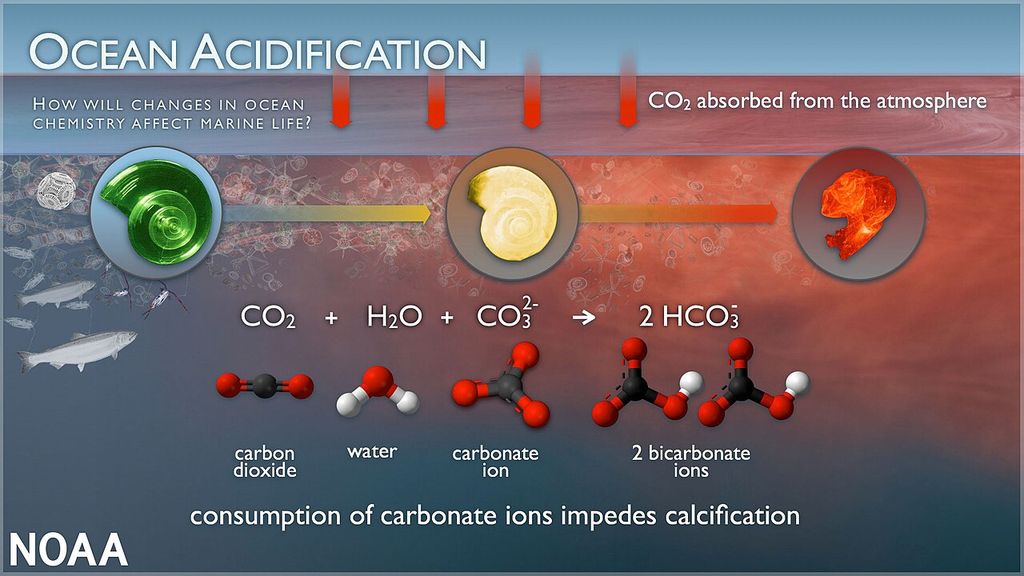
For more than 200 years, since the industrial revolution, the ocean has absorbed about 30 percent of the carbon dioxide released into the atmosphere. When CO2 dissolves in seawater, chemical reactions increase the hydrogen ions, and the water becomes more acidic. This is ocean acidification.
The problem is that carbonate ions — the building blocks of shells and coral skeletons — become scarcer. Oysters, corals and pteropods that build shells or skeletons find their construction material running short. As the graphic above shows, experiments confirm that a pteropod shell gradually dissolves in acidified seawater.
By the data
What to explore next
How might the effects differ among species and regions?
Evidence and reuse
Established descriptions are separated from questions to explore. No AI hypothesis is published here.
- Review status
- Primary source checked
- Source checked
- Content
- Original summary. The photo was license-checked and is shown with credit.
- DOI
- Not applicable