Earth / DISCOVER
Why does the sea rise and fall?
The forces exerted by the Moon and Sun help drive the tides.
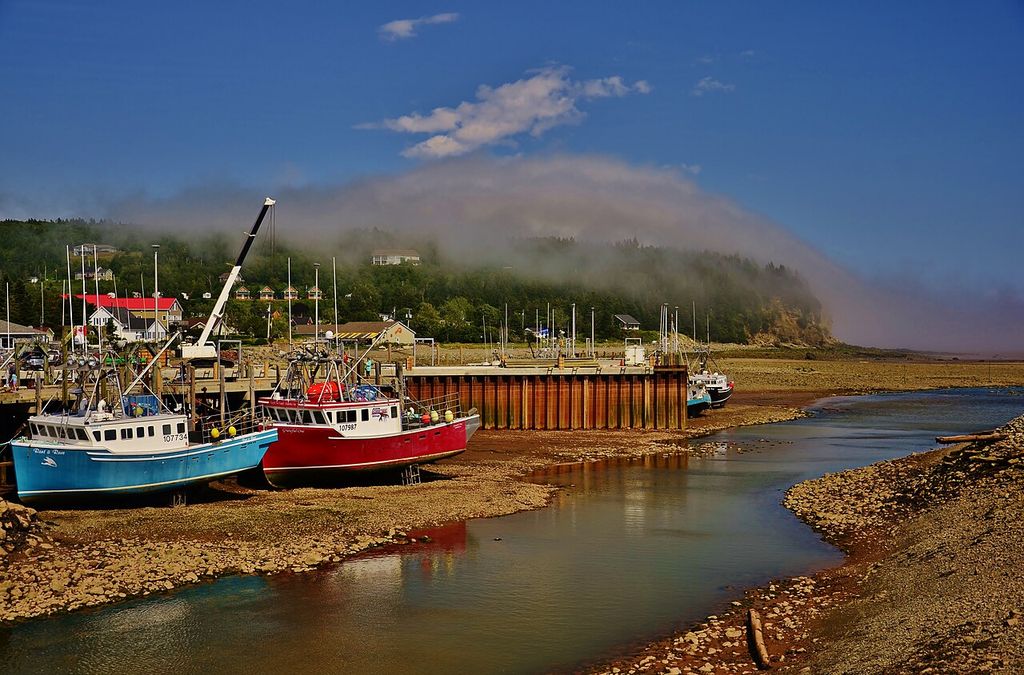
Why it amazesThe Moon’s gravity pulls the ocean in and out — and in one bay, the difference is as tall as a five-storey building
The story
Tides are the regular rise and fall of the sea, caused by the gravitational pull of the Moon and the Sun. A tide is a very long wave travelling through the ocean: when its crest arrives, it is high tide; when the trough arrives, low tide. The height difference between them is the tidal range.
The range differs enormously from place to place. Canada’s Bay of Fundy, in the photo, has the largest in the world — up to about 16 metres, while the global average is only about 1 metre. At low tide the water retreats so far that harbour boats are left sitting on the mud. The bay’s funnel shape gathers the tide’s energy into one place.
By the data
What to explore next
Why do the timing and height of high tide differ between coasts?
SCIENCE LAB
Try the science
Explore a basic change in gravity. This model does not calculate tides.
Evidence and reuse
Established descriptions are separated from questions to explore. No AI hypothesis is published here.
- Review status
- Primary source checked
- Source checked
- Content
- Original summary. The photo was license-checked and is shown with credit.
- DOI
- Not applicable